

What if the most important moment in travel is not what you see, but how you relate?
There are moments of sacred reciprocity in travel when something shifts quietly inside. Not the awe of a sweeping landscape. Not the exhilaration of arrival. But something subtler:
a recognition that you are not only witnessing a place; the place is, in some way, witnessing you.
An Invitation Into Relationship
I remember sitting before a shaman in Peru. The mountains were luminous, immense and utterly unmoved by our presence. He placed a few coca leaves in each of our hands and then gestured toward the offering he had been building for over an hour. No speech. No instruction. Simply an invitation.
It was not a ritual to observe. Rather, it was a relationship to enter.
The offering began small, the gestures simple. We each added our leaves, and the bundle slowly became an intricately layered work of art. Then he rolled it up, carried to a small hill, and burned it, giving all that careful work to the earth and air with joy, reverence, and gratitude.
The moment rearranged something in me. In that moment I understood, not intellectually, but viscerally, that nothing here was separate. The land was neither scenery nor a backdrop. It was not a resource to extract from. Everything and everyone is related.
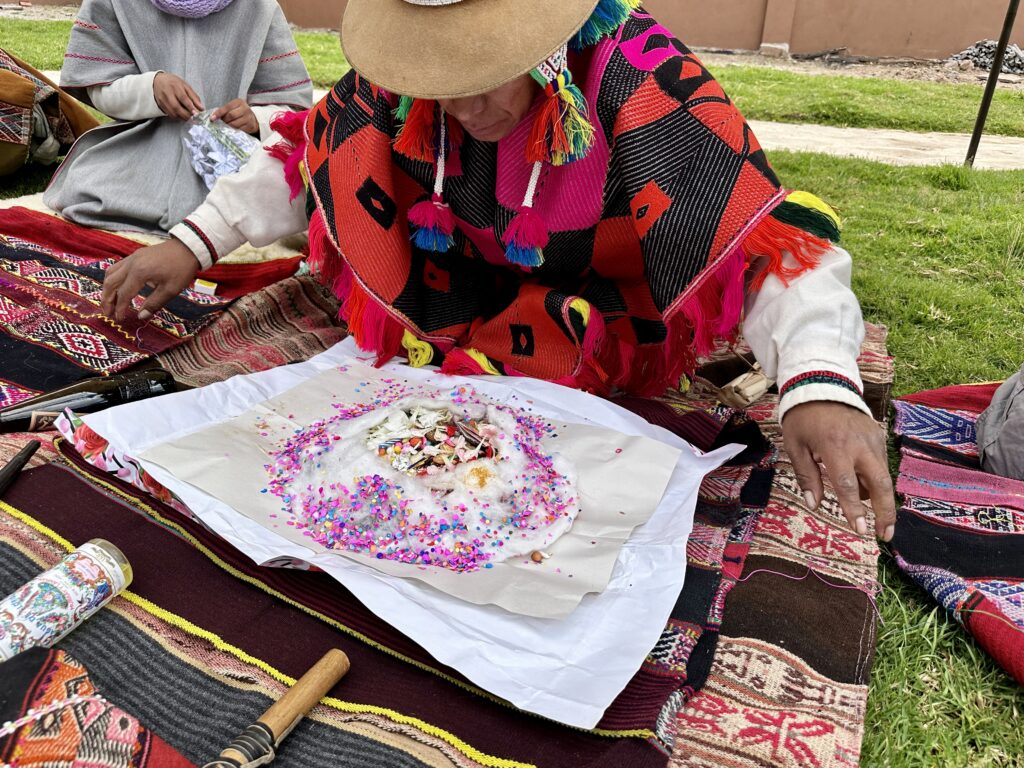
In the Andean tradition, this principle is called ayni — sacred reciprocity. But what struck me most was not the word. It was the lived experience behind it.
Ayni is not a concept to contemplate. Rather, it is a way of moving through the world in which giving and receiving are inseparable. You do not take from the land without offering something in return, just as you do not receive wisdom without acknowledging its source. Instead, you live in mutual exchange.
As Spirit Tours journeys across continents, from Peru to Bali, from Uganda to Egypt, this pattern appears again and again. Different languages. Different cosmologies. And yet, beneath the surface, a shared remembering: life flourishes through giving and receiving.
Bali: Daily Devotion as Relationship
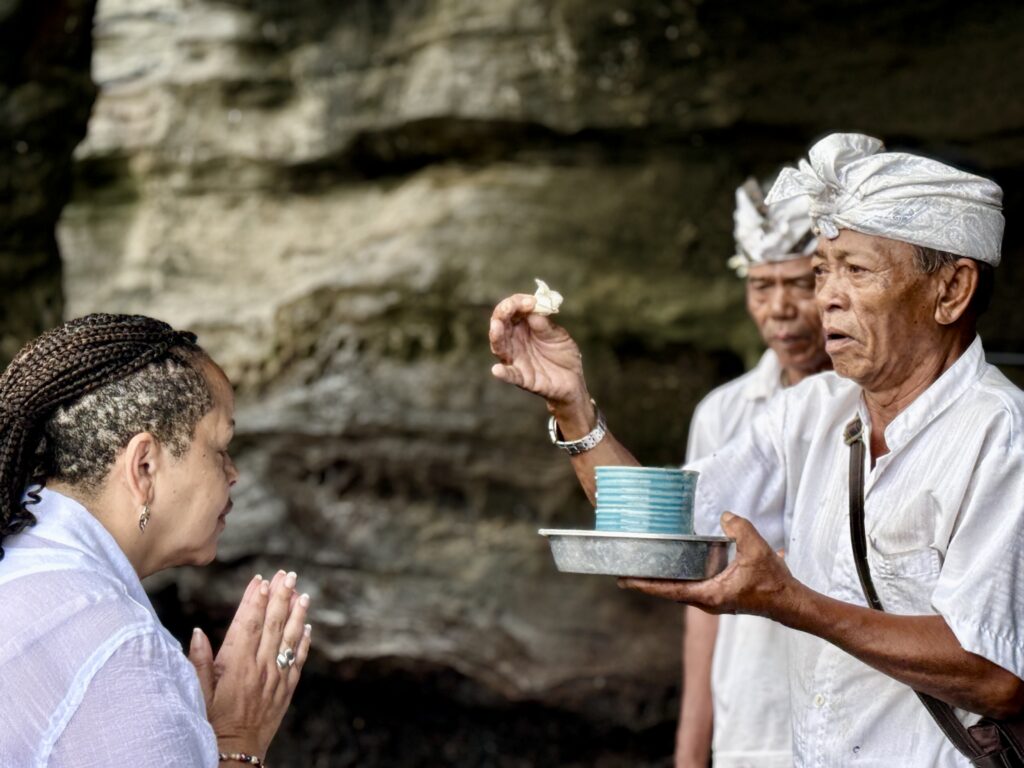
In Bali, I watched women kneel each morning before small woven baskets they had carefully made in the predawn quiet, filled with flowers, rice, and incense. Offerings placed on thresholds, sidewalks, shrines, even on motorbikes. New ones every single day.
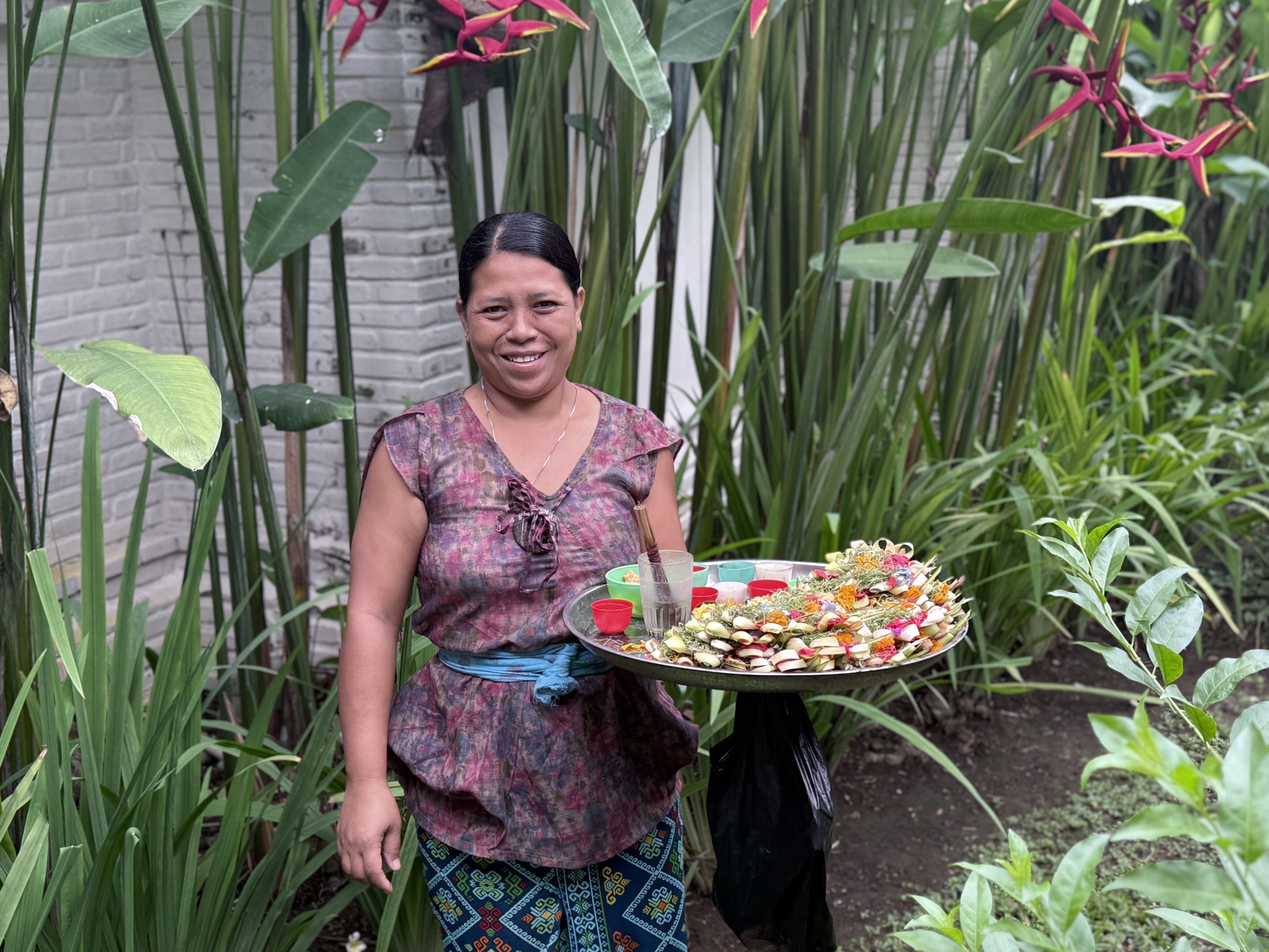
At first glance, it might be easy to romanticize these gestures as devotional art. But to stand near them is to feel something else entirely.
These offerings are not symbolic. They are sacred, intentional, and relational. They acknowledge that the human world is not self-sustaining, and that harmony requires participation. Gratitude is not a feeling, but an action repeated daily.
The offering feeds the unseen. And in return, the unseen sustains balance. This is reciprocity not as transaction, but as ongoing engagement.
Uganda: Belonging Within a Living Lineage
In Uganda, reciprocity revealed itself through belonging.
As our porters guided us through the forest to witness the gorillas, I began to sense that we were not simply visitors entering wilderness. In that moment, we were stepping into a living inheritance. The porters moved with an ease and attentiveness that felt rooted in something deeper than employment. Their care for those with a slower gait extended far beyond the payment offered.

Here, identity is rarely defined in isolation. One belongs to family, to clan, to ancestors, to land. The forest is not merely habitat. It is lineage. It holds memory that sustains both body and spirit.
In many Indigenous African worldviews, ancestors are not distant figures of the past. Instead, they remain present, guiding, protecting, observing. Responsibility flows backward and forward at once. To walk the land is to walk among those who came before and those yet to come.
Generosity, then, is not an act of kindness alone. More significantly, it is participation in a continuum.
The care extended to us on that journey felt less like service and more like stewardship, a recognition that we were temporarily woven into a web that long preceded our arrival. We were being carried not only through forest terrain, but through a relational field shaped by memory, reverence, and mutual obligation.
We were held by community. But reciprocity quietly asked the deeper question: How do we honor the lineage that holds us, even briefly?
Egypt: Stewardship Across and Within Sacred Time
In Egypt, standing within ancient temple walls and stone sanctuaries that have endured millennia, reciprocity revealed itself through time.
In Luxor and Karnak, the temples are not simply monuments to a vanished civilization. They are cosmologies in stone. Built in alignment with celestial patterns, seasonal cycles, and sacred geometry, they reflect a worldview in which the human and the cosmic are not separate realms.
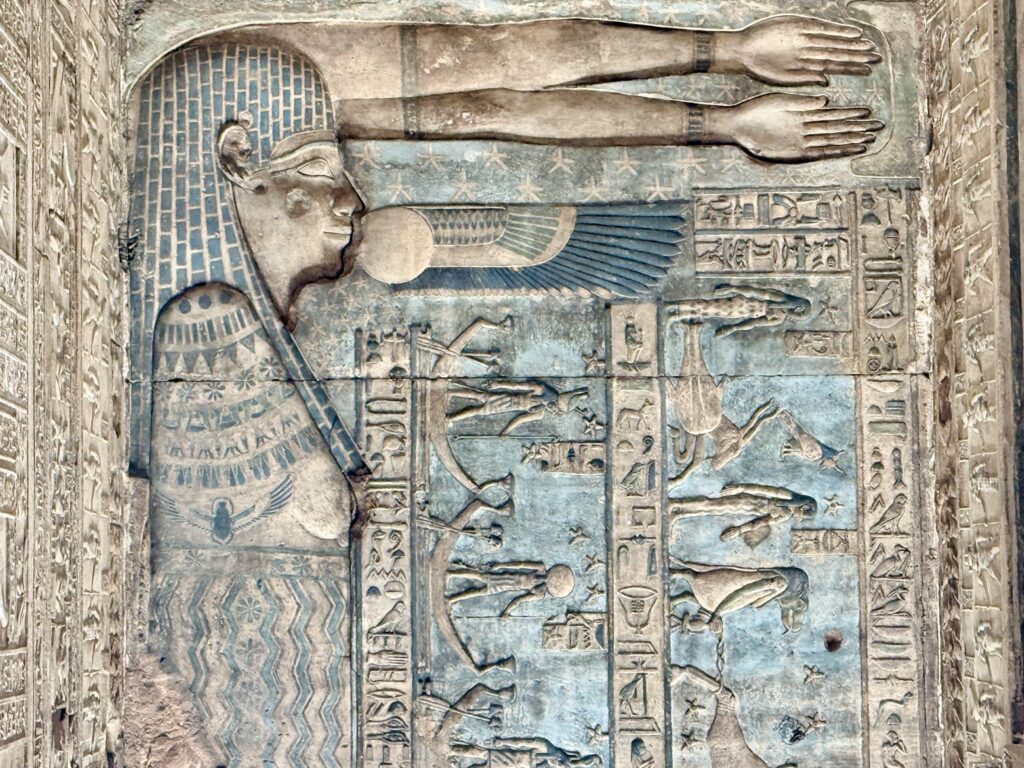
To build such a temple was not an act of construction alone. It was participation in ma’at, the ancient Egyptian understanding of divine order, balance, and harmony. This worldview recognizes that we are temporary stewards within an ongoing sacred story. The structures were designed to anchor heaven and earth together, to maintain equilibrium between seen and unseen worlds.
In this way, stewardship, was not about preservation for its own sake. Rather, it was devotion to continuity. Fundamentally, to tend sacred space was to uphold balance itself.
And that tending continues in the way Spirit tours creates its sacred journeys. Through reverent visitation, through the choice to approach these sites not as spectacle but as sanctuary, reciprocity extends across centuries.
Subscribe to our newsletter for twice-monthly reflections, spiritual travel insights, and first looks at new tours.
The Quiet Correction
Across landscapes and traditions, a gentle correction emerges.
Modern spirituality often celebrates personal awakening, self-expression, inner growth. These are not misguided pursuits. But when severed from reciprocity, they can subtly tilt toward extraction.
We seek the sacred, gathering teachings to consume the experience. And we miss the deeper invitation: relationship. Rarely are we asked, What are you giving back?
Ultimately, without reciprocity, spirituality becomes consumption. Indigenous worldviews, though diverse and distinct, reorient this imbalance. They remind us that relationship precedes insight, and belonging carries responsibility. That the sacred is accessed within a web of mutuality.
Reciprocity is not measured in equal exchange. Instead, it is about right relationship.
- Are you listening as much as speaking?
- Tending what sustains you?
- Aware of who and what supports you?
To live in reciprocity is to move from entitlement toward participation. We step beyond isolation and into interdependence. In doing so, admiration of the sacred becomes embodiment.
When Reciprocity Is Absent
When reciprocity is missing, something in us grows restless. We may take in beauty and still feel unsatisfied. At times, knowledge accumulates while we remain unanchored. We pursue healing yet neglect the ecosystems — human and ecological — that make healing possible. In the process, we become perpetual seekers, chasing the next experience without realizing that what is missing is not more receiving, but more giving.
In contrast, reciprocity restores proportion.
I have watched travelers change when this shift occurs. Not dramatically. Not performatively. But quietly, as they begin to notice how their presence impacts a place. They offer gratitude not as politeness, but as recognition. And they walk more gently.
Sacred Interdependence
Another thread woven through these traditions is sacred interdependence.
Spirituality is not self-defined in isolation. Rather, it is held within frameworks of relatedness to elders, ancestors, land, and future generations.
This interdependence is not restriction. Instead, it is respectful engagement that balances power with humility, insight with wisdom, belonging with accountability.
For many modern seekers accustomed to autonomy, this can feel unfamiliar. We prize independence. Yet something deep within us longs to be held within a larger story.
Reciprocity whispers: You are not alone here. And you are not unaccountable either.
How Sacred Reciprocity in Travel Changes Us
On Spirit Tours journeys, reciprocity is not taught. It is encountered.
It appears in how we approach sacred sites: with permission, reverence, acknowledgment of lineage. Also, it shapes how we partner with local communities, not as beneficiaries of tourism, but as collaborators and knowledge keepers.
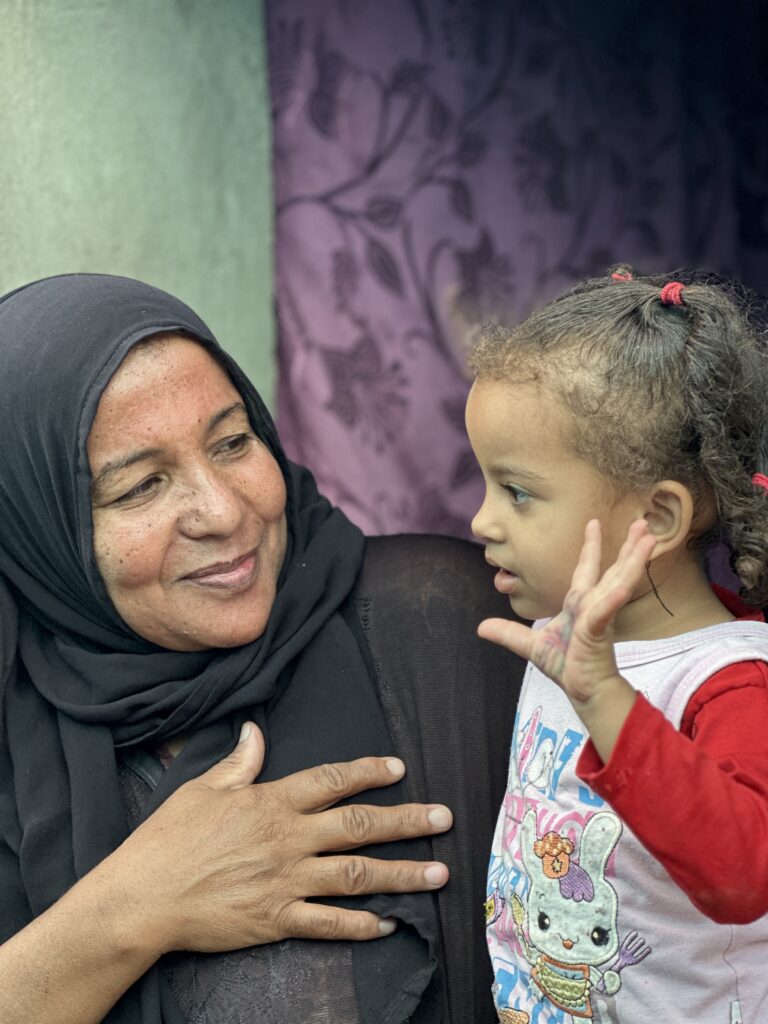
Travelers begin to sense that what they receive: insight, healing, connection, is inseparable from what they offer: presence, respect, resources, gratitude. The exchange may not be symmetrical. But it is sincere.
Over time, reciprocity becomes more than a travel ethic. It becomes a lens for daily life.
You begin to notice your relationship with the land where you live. You become attentive to the communities that sustain you. And gratitude becomes a way of living.
The question shifts from: What can I gain? to How am I involved?
Reciprocity is not about adopting Indigenous traditions. It is about remembering a human truth that predates fragmentation. Breath is giving and receiving. Ecosystems are interdependent. Love flourishes in mutuality.
When we live in reciprocity, we soften. We listen carefully and step lightly. And we give freely, not from obligation, but from belonging.
Perhaps this is what we are truly seeking when we travel to sacred places. Not escape. Not accumulation. But reorientation. A remembering that we are part of a living web.
The journey does not end when we board the plane.
Instead, the journey continues in how we shop, vote, and speak about the lands we have visited. In how we tend our neighborhoods and how we acknowledge the unseen labor supporting our lives. And in the smallest gestures: the quiet offering, the whispered thank you, the decision to give back before taking more.
The wisdom carried by Indigenous worldviews does not ask us to become someone else.
At its core, it invites us to remember who we have always been: beings shaped for relationship, sustained by mutual care, held within a web of giving and receiving older than any itinerary.
And perhaps the most sacred journey is not toward a distant destination, but toward living this way at home.
About the Author
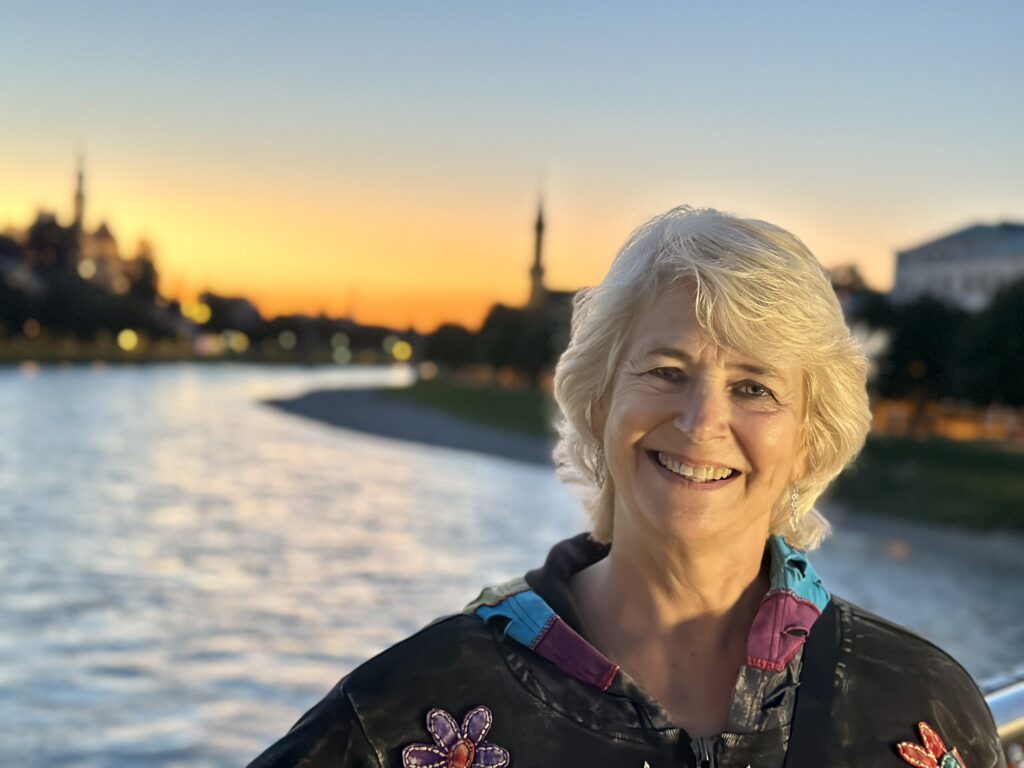
Rev. Dr. Petra Weldes is the Co-Owner of Spirit Tours. Dr Petra recently retired as the Spiritual Leader of CSLDallas a role she held since 1998. She is a gifted speaker, teacher, and interfaith leader who brings heart, humor, and insight to everything she does. Over more than three decades, her work has inspired thousands to live with greater joy and spiritual awareness.
An award-winning minister and author, Dr. Petra has led workshops and retreats around the world, helping people connect with their purpose and inner wisdom. She has also created courses on practical spirituality and co-authored three journals on living with joy. Through her teaching and storytelling, she creates welcoming spaces where people can explore, grow, and truly feel at home on their spiritual journey.
If you liked this article, your friends will too
Please join our Newsletter Referral Program and tell your friends about our Journeys of the Soul newsletter. Earn thank you rewards for sharing soul-centered stories.