
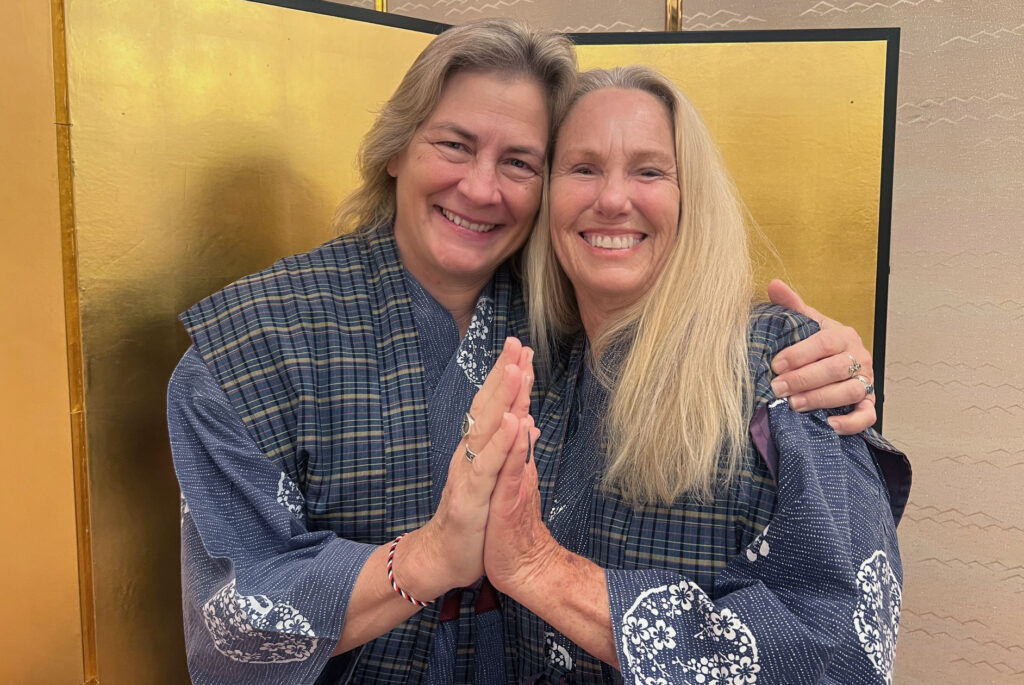
The first thing that struck me in Japan was how polite everyone is—and how deeply that reflects the Japanese mindfulness culture.
Everywhere we went, there was a constant exchange of bows. We were always bowing—and being bowed to. For me, it felt completely natural. As a Tai Chi practitioner and someone who has traveled throughout Asia, bowing has long been a familiar and meaningful gesture.
Even so, there was something about experiencing it here that felt different.
There’s a quality to the exchange—looking into someone’s eyes, bowing, and being acknowledged in return. It’s simple, yet it carries a quiet respect. A recognition of another person that feels both intentional and sincere.
That feeling stayed with me.
Over time, I began to recognize it as something deeper, a sense of reverence woven into everyday life.
A Different Way of Being
I have traveled all over Asia. Each country has its own character. And yet, Japan felt different.
It is, without question, the cleanest, quietest, and most polite country I have ever visited. The attention to detail is extraordinary. You see it everywhere—in flower arrangements, meal presentations, clothing, and the design of spaces.
Nothing feels rushed. Likewise, nothing feels careless.
Instead, there is a mindfulness in Japanese culture that shows up in everything.
In a way I didn’t expect, I felt it in my body. I felt nourished by the food and comforted by the sense of order. There was something grounding about being in a place where everything seemed so thoughtfully considered.
Experiencing Japanese Mindfulness Culture Through Practice
Travel always brings meaningful encounters. However, what stood out on this journey was how often we were invited not just to observe, but to participate.
When traveling with Spirit Tours, we don’t simply visit places—we learn about the spiritual practices that shape them. That difference is at the heart of what makes spiritual travel so distinct from ordinary tourism. As a result, that made every experience feel more personal and immersive.
The Temple Stay in Koyasan
Spending the night in a temple in Koyasan was one of the most memorable parts of the journey.
We slept on futons in rooms with shoji screens. Because sound carries easily, we had to be mindful of others. Yet it didn’t feel restrictive. The entire environment invited quiet.
In fact, that night felt a little like a sleepover with friends nearby—comforting, shared, and peaceful. I felt safe. At the same time, I wanted to honor the silence around me.
We prayed and chanted with the monks. Afterward, we bathed in the onsen. Then we walked through the ancient cemetery, surrounded by moss-covered shrines and a deep sense of history. I found myself wishing for more time there, just to wander and take it all in.
If you’d like more stories like these, subscribe to our newsletter for twice-monthly reflections, spiritual travel insights, and first looks at new tours.
Zenbo Seinei: Meditation Above the Forest
On Awaji Island, we visited a modern wellness center called Zenbo Seinei.
At first glance, the architecture was striking. A glass meditation hall extended out over the forest canopy, creating the feeling that we were floating above the trees.
As we practiced Qigong and meditation, that sensation stayed with me. Combined with the guidance of the teacher, this made the experience very different from meditation at home. It wasn’t just the practice—it was the setting, the energy, and the intention behind it.
Learning Through Experience
Throughout the trip, we were introduced to a range of spiritual practices in Japan.
In a temple surrounded by vibrant fall leaves, we practiced Zazen meditation. We chanted sutras and learned about both Shinto and Buddhist traditions through direct experience. In other words, we weren’t just hearing about these traditions—we were stepping into them.
During meditation, the monk offered an optional tap with a stick to help bring you back into the present moment. This was a new experience, and part of the depth and discipline behind the practice.
The People You Meet
As always in travel, interactions with local people created some of the most meaningful moments.
In particular, Karen went out of her way to make those connections possible.
She found a local dojo so we could participate in a Tai Chi class—not as observers, but as participants. There is something very different about learning a practice within its own cultural context, surrounded by people who live it every day.
Additionally, she also arranged special meals in temples that are not open to the public. One that stands out was at Sumiyoshi Taishi. The setting, the presentation, and the level of care in every detail reflected the deep-rooted values of Japanese culture.
At the end of the meal, our group gave the staff a standing ovation. They were deeply touched. What followed was a spontaneous exchange—photos, laughter, and genuine connection.
It didn’t feel like a performance. Truly, it felt like a shared moment of mutual appreciation.
A Living Contrast
Another thing I loved, was the seamless blending of old and new.
You might see someone in a traditional kimono walking beside someone dressed like a character from an anime. Ancient temples exist alongside modern architecture and bustling shopping centers.
At the same time, everything coexists.
And everywhere, people clearly put thought into how they present themselves. There is care, effort, and pride—whether traditional or modern.
This attention to detail is another expression of Japanese mindfulness culture I came to value.
What I Noticed
I wouldn’t say I had a dramatic personal transformation on this trip. However, I did notice something. Specifically, I became more aware of politeness, quiet, aesthetics, and the way things are presented.
So it made me think: What if everything I did—everything I said, everything I created—carried that same level of care? Sometimes transformation happens this way—not through dramatic change, but through quiet awareness that stays with you long after you return home.
We kept a full and active schedule, so I didn’t necessarily slow down during the trip. Even so, the awareness was there. And it stayed.
What Came Home With Me
I came home with a deep love and respect for Japan and its culture. It is, without question, one of the most interesting places I have ever visited—and I have traveled to over 50 countries.
Ultimately, what has stayed with me most is a greater mindfulness in how things are presented. Whether it’s a meal, a space, or even an interaction, I find myself paying more attention to the details.
Not perfectly. Not all the time. But still, more than before.
And perhaps, sometimes, that feels like enough.
About the Author

Jessica Kolbe is an educator in the Health and Wellness field and a Level 3 certified Tai Chi and Qigong instructor. She is one of only six Senior Teacher Trainers for The Institute of Integral Qigong and Tai Chi (IIQTC), where she helps others deepen their practice through mindful movement and awareness. As lifelong traveler who has explored more than 50 countries, Jessica is drawn to experiences that cultivate presence, cultural connection, and a deeper appreciation for the rhythms of daily life.

Truly, we are grateful when you share our newsletter
Thank you for telling your friends about Spirit Tours. And, when you join our referral program, you’ll also earn thank you rewards for sharing Journeys of the Soul with them.