
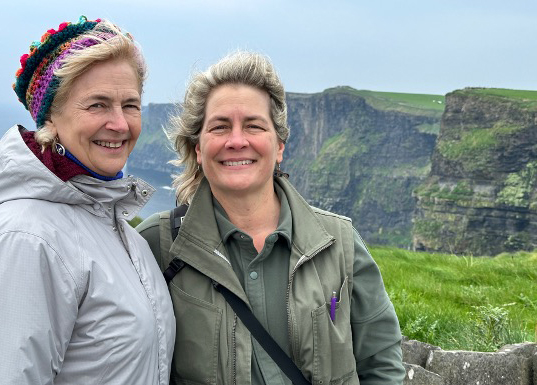
“Transformation doesn’t happen automatically—it arises when certain conditions are present.” — Rev Dr Petra Weldes
A transformational journey is designed to create moments of awe, intensity, quiet, and introspection. These conditions are not abstract. They are lived. Felt. And experienced in moments that stay with us long after the journey ends.
What follows is both the understanding of what makes travel transformational, and the lived experience of what it feels like when it unfolds. If you’re new to this idea, our reflection on what spiritual travel is and how it differs from tourism offers a deeper foundation for understanding how these journeys invite transformation.
The Moment Everything Shifted
In June of 2025, during our sacred journey to Damanhur, Italy, we visited the Devil’s Bridge in Lanzo Torinese. Our spiritual leader had just guided us through a powerful process—releasing what we no longer wished to carry and consciously inviting in what we were ready to become.
Afterward, I stepped away from the group and sat alone on a rock. In that quiet, something deep within me began to rise. My birth story—my childhood trauma—surfaced in a way it never had before. The narrative I had carried my entire life… the belief that I had been abandoned, rejected by my mother in my earliest years.
But in that sacred space, something shifted.
For the first time, a new awareness came through with undeniable clarity: yes, she had rejected me—but how long had I been rejecting myself?
The answer came from somewhere deeper than thought: 59 years.
In that moment, everything cracked open. Grief moved through me in waves, and I found myself wailing in a way that felt both ancient and liberating. It was as if something long held in my body was finally being released.
When I was able to stand and make my way back to the group, I knew—without question—that I was not the same person who had walked away.
That moment marked the beginning of a profound inner shift. A commitment, really—to no longer reject or betray myself, in any moment.
Now, nine months later, I can say something I had never truly known before: I love myself. And I genuinely like the person that I am.
-Rev Karen Fry
What Makes Travel Transformational?
“Transformation is not left to chance—it is created through experience, reflection, and shared insight.”— Rev Dr Petra Weldes
A journey may be beautiful, inspiring, even unforgettable. But transformation asks something more.
A transformational journey creates moments of awe, intensity, quiet, and introspection—and, most importantly, invites integration through shared experience and deep conversation.
However, these moments are not accidental. We create them intentionally—and receive them consciously.
In practice, this unfolds through a deliberate series of gatherings throughout a journey, each one offering space for reflection, insight, and connection. However, these experiences are not meant to be navigated alone. The shared space—the presence of others, the act of being witnessed, and the opportunity to listen and be heard—provides support that allows deeper insight to emerge.
And in these spaces, something begins to shift.
Speaking and listening—engaging with these intentionally directed experiences—opens the way for something truly meaningful to reveal itself.
It is this process—experience, reflection, and shared insight—that transforms a journey from something we remember into something that changes us.
Importantly, these conditions don’t unfold in a fixed sequence—they reveal themselves in different ways throughout a sacred journey. Sometimes they arrive as intention—a quiet decision about how we will enter the experience. And sometimes as presence—an invitation to slow down and fully inhabit what is unfolding. As openness, or through the support of shared experience, or in the reflection that allows meaning to take root.
Each one opens a different doorway. Together, they create the environment where transformation becomes possible.
Intention: Where the Journey Begins
“When someone intends to be transformed, they are available to the experience in a completely different way.”— Rev Dr Petra Weldes
In many ways, transformation begins before the journey even starts.
Spirit Tours sets the intention to provide experiences and create opportunities for transformation.
However, we can only offer the container. Ultimately, what unfolds within that container depends on the intention of the traveler.
Setting an intention at the beginning of a journey focuses attention. It creates a consistent inner thread—one that invites awareness, insight, and reflection as the experience unfolds.
In practice, the intention itself may be simple.
It might be a willingness to be open, or a commitment to be present. A quiet decision to move through the journey without resistance or complaint.
Indeed, it is less about the words, and more about the orientation of the traveler.
When we set that intention ahead of time, affirm it along the way, and return to it in reflection at the end, something deeper begins to take root.
Integration becomes possible—and through that integration, transformation begins.
What Presence Actually Feels Like
Presence, for me, feels like a softening into the moment—like the edges of time dissolve and I’m no longer rushing toward the next experience, but fully inhabiting this one.
When I’m traveling in a meaningful way, presence feels spacious. My senses heighten—the texture of the air, the rhythm of footsteps on an ancient path, the way light falls across a landscape I’ve never seen before yet somehow recognize. There’s a quiet alertness, a listening. Not just to the place, but to something deeper moving within me.
It often arrives as a kind of reverence. I’m aware that I am a guest—on the land, in a culture, in a moment that will never come again in quite the same way. That awareness brings humility, and with it, gratitude. I find myself less inclined to capture everything and more willing to receive it.
Presence also feels like connection—when the separation between “me” and “them” softens. A conversation with a local, a shared smile, a sacred site, or even a silent sunrise can open that doorway. In those moments, travel becomes less about seeing and more about being.
And perhaps most profoundly, presence feels like coming home to myself in a new place. The external journey mirrors an inner one, and I remember that the sacred isn’t just in the destination—it’s in the depth of attention I bring to each step along the way.
-Rev Karen Fry
Why Presence Changes Everything
“The only way to be available to insight and awareness is to slow down and become fully present.” — Rev. Dr. Petra Weldes
Without presence, even the most sacred places can remain just scenery. Instead, rather than simply grabbing a photo as we travel from place to place, taking time to be present—to the beauty, the discomfort, the information, whatever is there—allows the experience to become available to us, and us to it.
Our culture prioritizes acquisition, consumption, and success, and we often measure our travels by that same yardstick. However, if we want to measure our travels in terms of how we come away changed, we have to enter the experience in a completely different way.
And in that slowing, something else becomes visible.
Being present makes us aware of ourselves—our discomfort as well as our joy. We become aware of our inner dialogue and outer behaviors. We begin to notice the incongruence between how we show up and who we want to be.
This awareness becomes powerful material for transformation.
The Journey That Stays with You
A meaningful journey doesn’t end when I return home—it continues to unfold within me, often in ways I don’t immediately recognize.
When I travel with intention—especially on sacred journeys—something deeper takes root. It’s not just the memories or the beauty of the places, but the energy of the experience. The prayers spoken, the stillness felt, the insights that arise in those liminal spaces—they seem to land not only in my awareness, but in my subconscious… even in my bones.
There’s a kind of imprinting that happens, beyond words.
I notice that I come home different. Sometimes it’s subtle—a greater patience, a softer way of being, a renewed sense of what truly matters. Other times, it’s more tangible: a shift in priorities, a new practice, or a clearer alignment with my purpose.
Certain moments return to me unexpectedly—a chant we repeat over and over again, the silence of a mountain, the eyes of someone I met along the way. And in those moments, I’m transported back, not to relive the experience, but to reconnect with the part of myself that was awakened there.
These journeys become touchstones. When life feels noisy or disconnected, I can draw upon them as a kind of inner sanctuary—a remembering of presence, of reverence, of truth.
In that way, the journey continues to live in me, long after I’ve returned home.
-Rev Karen Fry
What Prevents Transformation?
“Our resistance, judgement, and unconscious patterns can prevent transformation.” — Rev Dr Petra Weldes
Even in meaningful environments, we can still move through the experience without truly changing. With the inevitable difficulties of travel, we can forget our intentions and revert to these familiar ways of thinking and being.
When this occurs, our habitual patterns begin to shape our experience. They shape how we experience what is happening around us—and may even filter out our awareness of the opportunities and insights available within it.
Whether it’s a talkative roommate, a delayed meal, or a steep set of stairs… whether it’s the weather, the temperature, or the crowds—these moments can pull us back into reaction rather than awareness.
When our patterns lead, we are no longer available to something new. We are less open to connection, to insight, to inner awareness.
And in those moments, we can miss what is being offered—no matter how meaningful the experience around us may be.
And yet, even then, each moment offers a choice—to return to intention and re-enter the experience with awareness.
What We Often Get Wrong About Transformation
I think many people believe that travel becomes transformational because of where you go—but in truth, it’s about how you go.
There’s a common misconception that a destination itself holds the power to change you—that if you just get to the right place, something profound will happen. And while certain lands absolutely carry a sacred resonance, transformation isn’t guaranteed by geography alone.
You can stand in the most breathtaking, spiritually significant place in the world and still remain untouched if you’re distracted, rushed, or only skimming the surface.
What makes travel transformational is intention, presence, and a willingness to be changed.
It’s the inner posture you bring—the openness, the curiosity, the humility. It means allowing yourself to slow down enough to truly listen… to the land, to the people, and to your own inner voice.
It’s being willing to step out of the role of observer or consumer and into something more participatory, more relational.
Transformation often happens in the quiet, unplanned moments—the pause between destinations, the unexpected conversation, the feeling that arises when something within you is mirrored by what you’re experiencing outside of you.
I also think people underestimate the importance of integration. Transformation isn’t just about what happens during the journey, but how you carry it home. Without reflection and intention, even the most powerful experiences can fade into beautiful memories rather than lived change.
So it’s not just the journey itself—it’s the depth of engagement, the openness of heart, and the willingness to let the experience reshape you from the inside out.
-Rev Karen Fry
The Journey That Continues
“When intention is set ahead of time, affirmed along the way, and reflected upon at the end, integration becomes transformation.” — Rev Dr Petra Weldes
Transformation doesn’t come automatically. Instead, it emerges through how we engage, what we allow, and who we are willing to become.
And sometimes, it begins in a single moment—quiet, unexpected, and irreversible.
A moment when something within us shifts, when an old story loosens its grip. And we begin to see ourselves—and our lives—differently than we did before.
These, then, are the moments that stay with us. The ones we return to, long after the journey ends.
And over time, they begin to ask something of us.
To listen more closely. To move more consciously. And to live in alignment with what we’ve come to know.
Because, in the end, we don’t find it in the destination.
We carry it in the way we return—and in who we become.
About the Authors
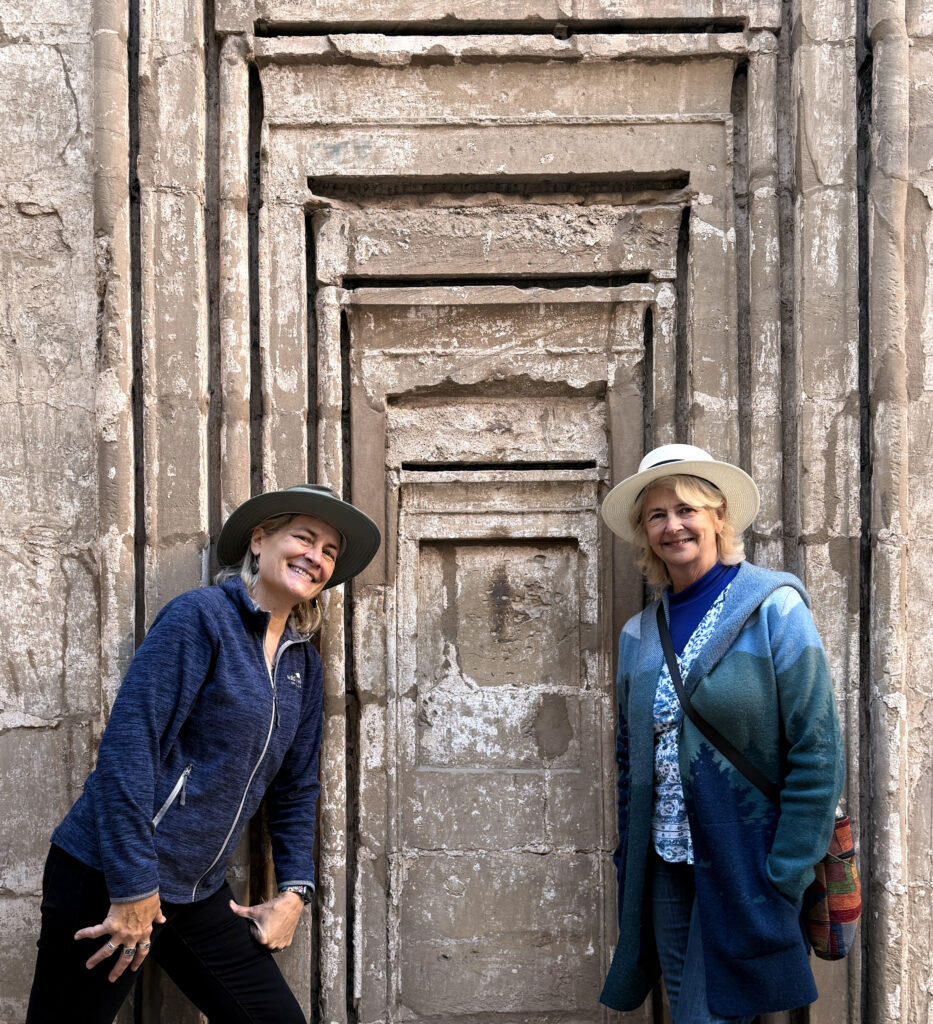
Rev Karen Fry is the CEO and Co-Owner of Spirit Tours, an ordained minister, and a guide for those seeking deeper connection through travel and spiritual practice. Above all, she leads with presence, compassion, and a deep respect for the inner journey each traveler brings.
Karen has led journeys across sacred destinations around the world, creating spaces where transformation unfolds through reflection, connection, and lived experience. She brings insight, care, and a genuine willingness to walk that path alongside others.
Rev Dr Petra Weldes is a spiritual teacher, speaker, and Co-Owner of Spirit Tours who has spent decades guiding others toward greater awareness, clarity, and inner wisdom. Known for her ability to translate spiritual principles into lived experience, she helps travelers understand not only what transformation is—but how it happens.
In doing so, Petra creates environments where insight emerges, deepens through reflection, and takes root over time. She guides travelers with clarity, warmth, and a depth of understanding that continues to support transformation long after the journey ends.
You May Also Like
- What is Spiritual Travel and How is it Different From Tourism
- Sacred Containment: What It Means to Be Held While You Travel
- Is Spiritual Travel Religious?

Invite Someone Along
After all. some journeys begin with a single conversation. If this one resonated, pass it along—and invite others to explore what’s possible. You can do that here, and we’ll support you along the way.