
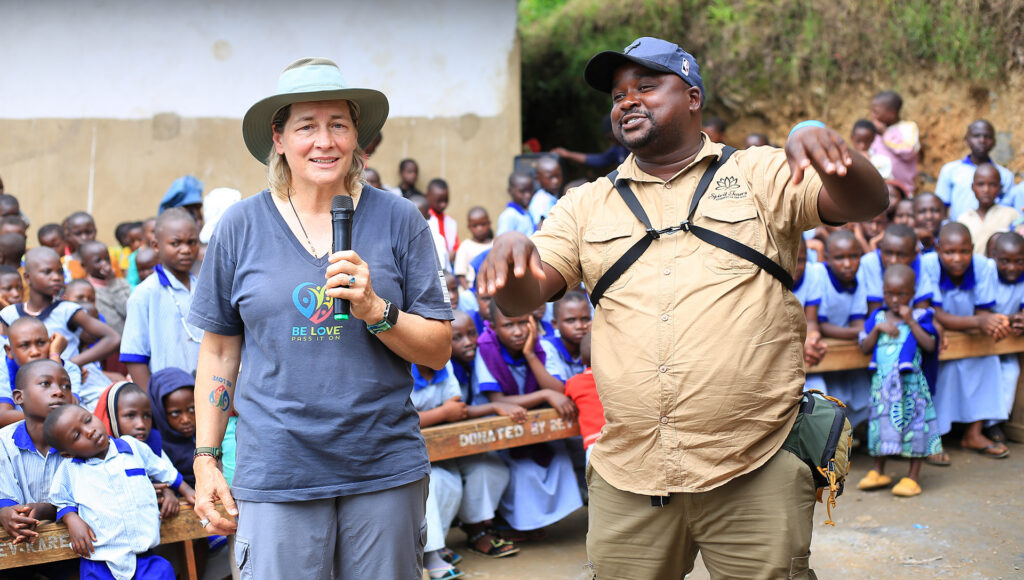
When tragedy strikes somewhere in the world, our instinct is often to pull away. For travelers, that can raise a difficult question: Is it right to travel after a crisis?
We see images of devastation and communities in pain, and we wonder whether traveling there could possibly be appropriate. Would our presence be insensitive? Would the money we planned to spend on a journey be better offered as a donation instead?
These are compassionate questions. And recently, some of our own Spirit Tours sacred travelers found themselves asking them.
After catastrophic flooding struck northern Nepal, several travelers preparing for our upcoming journey to Bhutan—which includes time in Kathmandu, Nepal—wondered whether they should cancel. Some even considered donating the money they would have spent on the journey to support the people of Nepal instead.
Their instinct came from love. But when we reached out to our travel partner in Nepal, we heard something important:
PLEASE COME.
When Staying Away Can Cause Another Kind of Harm
When a tragedy occurs, we naturally focus on the people and communities directly affected. But the impact often extends much farther.
Guides, drivers, hotels, restaurants, artisans, shopkeepers, and families may depend upon tourism for their livelihoods. When it is safe and appropriate for visitors to return—or when unaffected areas remain ready to receive travelers—the disappearance of tourism can create another layer of hardship.
Our partners in Nepal very much want us to continue with our plans.
That conversation reminded me of something I have learned over many years of traveling: sometimes the loving response is not to withdraw.
Sometimes it is to show up.
What Egypt Taught Me About Showing Up
I learned this lesson powerfully when I traveled to Egypt for the first time in 2016 on a spiritual pilgrimage.
Friends and people in my spiritual community could not believe I was considering going. Everything they were hearing suggested Egypt was unsafe, and they were especially concerned about me traveling there as a woman. Although I was joining a group, their fear was real—and I understood it.
And then I arrived.
Again and again, the words I heard from the Egyptian people were, “Welcome home.”
As an American, I had rarely experienced such an overwhelming sense of welcome in another country. Everywhere we traveled, I felt safe, embraced, loved, and supported.
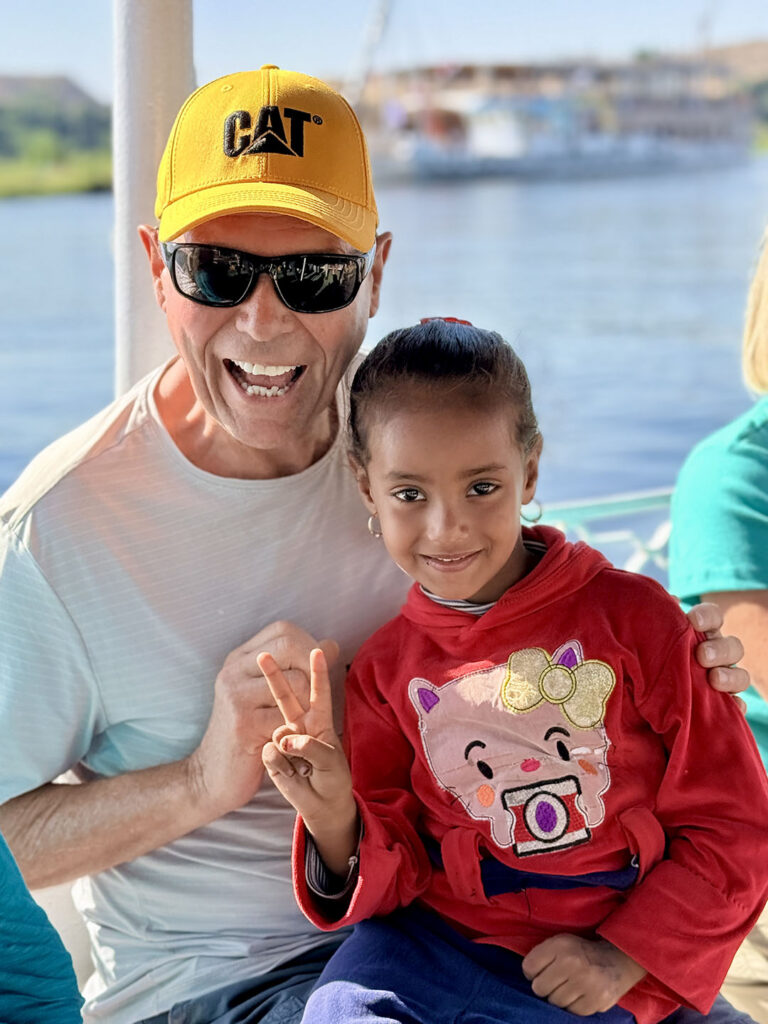
But I also heard another message repeatedly from the people we met: “Please tell Americans to come back.”
The political upheaval of the Arab Spring had devastated Egypt’s tourism industry. In 2010, tourism revenues had been approximately $12 billion. By 2016, they had fallen to nearly half that level. Behind those statistics were real people—guides, drivers, hotel employees, restaurant workers, vendors, artisans, families, and entire communities whose livelihoods depended upon visitors.
What I saw on the ground was profoundly different from the picture many people back home imagined. The Egyptian people weren’t asking us to rescue them. Rather, they were asking us not to abandon them.
I made a promise that I would return the following year with a group of my own.
That experience changed the way I think about travel during difficult times.
Subscribe to our newsletter for twice-monthly reflections, spiritual travel insights, and first looks at new tours.
Sacred Travel Means Being in Relationship
There is something about these moments that speaks directly to why we call what we do sacred travel.
When we travel from a spiritual perspective, we recognize that all of life is connected. We don’t simply visit a country when everything is beautiful and easy. We enter into a relationship with its people, culture, sacred places, and, sometimes, the realities everyone is facing.
That relationship asks something of us.
It asks us not to make assumptions about what another community needs simply because we are trying to help. It asks us to listen.
There will certainly be times when traveling after a natural disaster or during political unrest is neither safe nor helpful. A community may need its resources for residents and recovery workers. Infrastructure may be damaged. Local people may simply not be ready to welcome visitors.
And there are circumstances when safety concerns are very real. At Spirit Tours, we will never knowingly put our travelers, our partners, our team, or ourselves in harm’s way.
But there are also times when the opposite is true—when the people on the ground are ready to welcome us and our decision to stay away would remove income and human connection at precisely the time they need both.
So how do we know the difference?
For me, it begins with the people who actually live there.
When something happens in a country where we are preparing to travel, I reach out directly to our local partners—the people who live there, work there, raise their families there, and make their livelihoods in tourism. I ask them to tell me truthfully what is happening on the ground. Is it safe? Is the infrastructure functioning? Are travelers welcome? Would our presence be supportive—or burdensome?
I listen not only to the news and government advisories but also to the lived experience of trusted people who know their country intimately.
News reports and official warnings have an important role, but they can also paint an entire country with a very broad brush. An isolated event, a particular region, or the actions of a relatively small number of people can sometimes create the impression that an entire nation is unsafe.
Discernment asks us to look more deeply. It asks us to hold safety and compassion together.
And ultimately, I open my heart and mind to the people and the place itself and ask: What is the loving choice here?
Sometimes Helping Begins With Asking
As we prepare for Nepal, we are also speaking with our partners about whether there are specific items that would be genuinely helpful for us to bring.
We could simply decide for ourselves what people must need. But that isn’t really the point.
Instead, we want to listen to those who are there and respond in the most useful way possible.
Perhaps that, too, is part of sacred travel.
We arrive not as rescuers, but as guests. We recognize the wisdom, dignity, and agency of the people who welcome us. And instead of assuming we know how to help, we ask.
Traveling across many continents over the past several decades has taught me so much about this—especially when I travel from a spiritual perspective.
It is not my role, nor the role of our travelers, to arrive as the “hero” or “rescuer,” assuming we know what another person or community needs most.
We can simply be present. We can listen. And when appropriate, we can ask.
When Listening Becomes an Act of Love
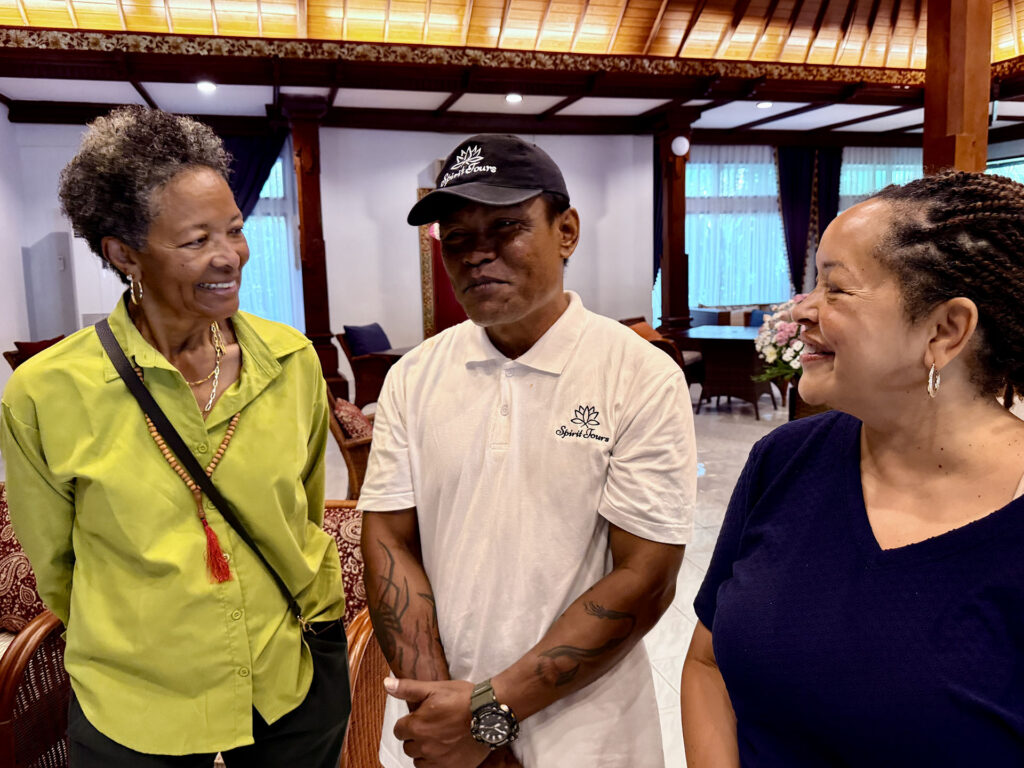
On a recent Spirit Tours pilgrimage to Bali, one of our longtime guides came to me with tremendous vulnerability. His wife had recently undergone an expensive surgery, and because his family did not have the money to pay the medical expenses, he had taken out a local loan carrying extremely high interest.
He asked if I would be willing to loan him $1,000 for a year.
I shared his request with our sacred travel group. Their response wasn’t to immediately decide what they thought he needed. Instead, they asked me to find out what it would take to completely cover the remaining cost of his wife’s surgery and recovery.
The answer was $1,700. Collectively, our group raised the entire amount.
When we presented it to him on our final day together, he sobbed with gratitude.
That moment has stayed with me. This wasn’t about being heroes. It wasn’t about arriving in another country believing we had come to save someone.
We had formed a relationship with another human being. Someone within our sacred travel family had a need. He had the courage to ask. We had the capacity to respond.
For me, that is what it means to be a Powerful Force for Good while traveling.
We Belong to One Another
Perhaps moments like these invite us into one of the deepest teachings of sacred travel: We belong to one another.
Travel reminds us that the people we sometimes experience only as images on a television screen or headlines on our phones are not abstractions.
They are people.
Parents sending children to school. Guides sharing the stories of their ancestors. Restaurant owners, artisans, hotel employees, drivers, farmers, shopkeepers, spiritual teachers, and families.
And when disaster or political unrest strikes, they don’t suddenly cease being those people.
We go not simply as tourists, but as guests.
We go with reverence.
We go with compassion.
We go willing to listen.
And sometimes, after a place has experienced great hardship, we may discover that compassion does not require us to turn away.
When it is safe, when our presence will not interfere with recovery, and when the people who would welcome us are telling us they want us there, continuing the journey can become its own quiet act of support.
We stay in their hotels. We eat in their restaurants. We hire their guides and drivers. We purchase from their artisans and shopkeepers. We sit together, share stories, laugh, learn, and remember our common humanity.
Our presence matters.
Our absence can matter, too.
Sacred travel asks us to be wise enough not to go when going would create harm—and courageous enough not to stay away simply because fear has painted an incomplete picture. Most of all, it asks us to listen carefully enough to understand the difference.
Because sometimes the loving choice is to stay away.
And sometimes the loving choice is to GO.
About the Author
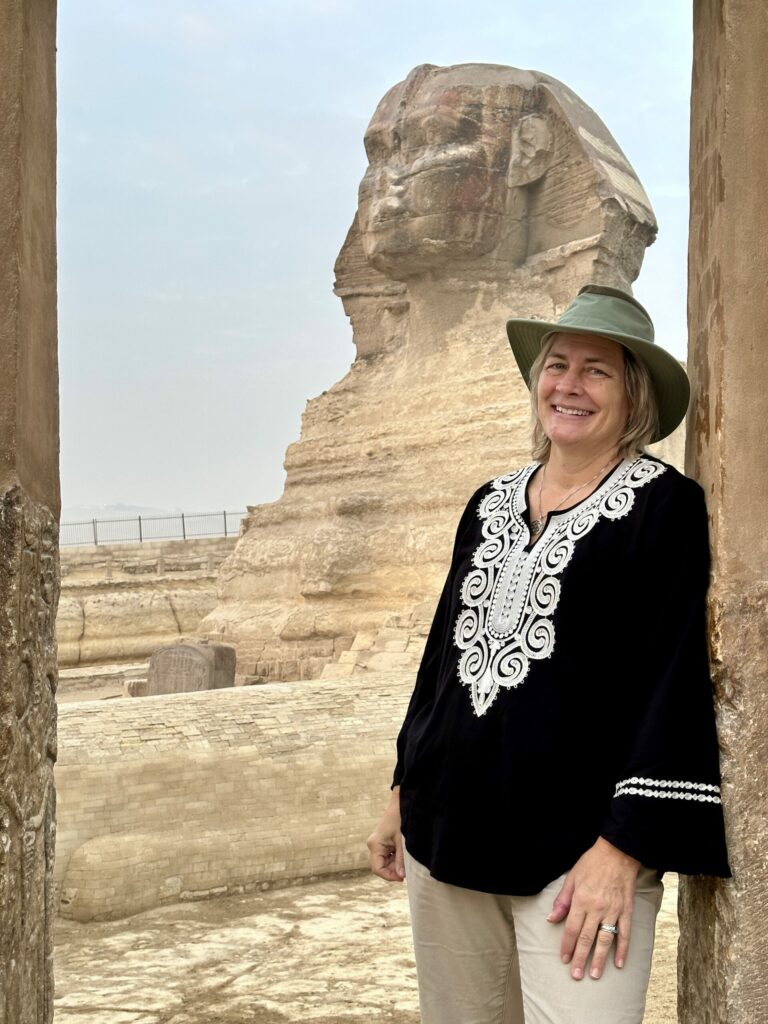
Rev. Karen Fry is an ordained minister, spiritual teacher, wildlife photographer, and the CEO of Spirit Tours. After a successful corporate career, Karen followed her deeper calling into ministry and, in 2022, acquired Spirit Tours to unite her love of travel with her devotion to spiritual awakening. With more than 25 years of Spirit Tours’ legacy and her own over 30 trips led worldwide, Karen’s leadership is marked by authenticity, presence, meticulous care, and a profound reverence for the natural world.

Some Things Are Meant to Be Shared
If these stories and reflections speak to you, perhaps you know someone they would speak to, too. Share Journeys of the Soul and invite someone you care about into our growing community of sacred travelers. Our newsletter referral program helps our community grow.